What ISO 17100:2015 Regulates
ISO 17100:2015 "Translation services — Requirements for translation services" is a standard developed by the International Organization for Standardization (ISO) specifically for the translation industry. It replaced the outdated European standard EN 15038:2006 and has been in effect since 2015.
The standard covers three key areas:
- Translator qualifications — education, experience, confirmed competence in language pairs
- Translation process — mandatory stages from pre-project preparation to final delivery
- Quality management — documentation, feedback, corrective actions
Translator Requirements Under ISO 17100
The standard sets strict requirements for specialists. A translator must meet at least one criterion:
- Higher education in translation (bachelor's degree or higher)
- Higher education in another field + at least 2 years of documented translation experience
- At least 5 years of professional translation experience without specialized education
At our agency, all 50+ in-house and freelance translators undergo verification against these criteria. We maintain copies of diplomas, certificates, and portfolios for each specialist. When assigning orders, we consider not only the language pair but also subject specialization — medicine, law, engineering.
Mandatory Translation Process Stages
ISO 17100 describes a chain of mandatory stages. Skipping any of them means violating the standard.
- Pre-project analysis. The manager assesses volume, complexity, terminology, agrees on the glossary and TM (Translation Memory). If the client has a corporate terminology database — we load it into SDL Trados or memoQ before starting.
- Translation. Performed by a qualified translator using CAT tools. The standard requires the translator to work into their native language — a fundamental difference from many freelancer practices.
- Revision. A second specialist — the editor — compares the translation against the original. This is not proofreading: the editor checks accuracy of meaning, terminology, and style. The editor must be a different person from the translator.
- Review (optional). Checking the monolingual translation text for literacy, style, and readability. Mandatory for published materials.
- Final check and delivery. The manager verifies completeness, formatting, and compliance with specifications.
How ISO 17100 Differs from EN 15038
EN 15038:2006 was ISO 17100's predecessor, operating in Europe. Key differences of the new standard:
- International status. EN 15038 applied only in the EU; ISO 17100 is recognized in 164 ISO member countries.
- Stricter competence requirements. ISO 17100 clearly describes minimum qualification criteria; EN 15038 formulated them vaguely.
- Data management. ISO 17100 includes requirements for storing and protecting client data, aligning with GDPR and Russian Federal Law 152-FZ.
- Feedback. The standard requires logging complaints and analyzing error causes — a continuous improvement cycle (PDCA).
What the Standard Guarantees Clients
For a company ordering translation, an agency's ISO 17100 certification means specific things:
- Two-stage control. Every text undergoes translation and revision by different specialists. The probability of missed errors drops significantly.
- Qualified performers. You don't risk receiving a translation from a student or non-specialist.
- Transparent process. You can request information about translator and editor qualifications, work stages, and tools used.
- Data protection. Your files are processed according to regulated security procedures.
We have been working to the ISO 17100 standard since 2018. Learn more about our team and processes on the About Us page. Order written translation with quality guarantees or view examples of our work in the portfolio.
How to Verify an Agency's Certification
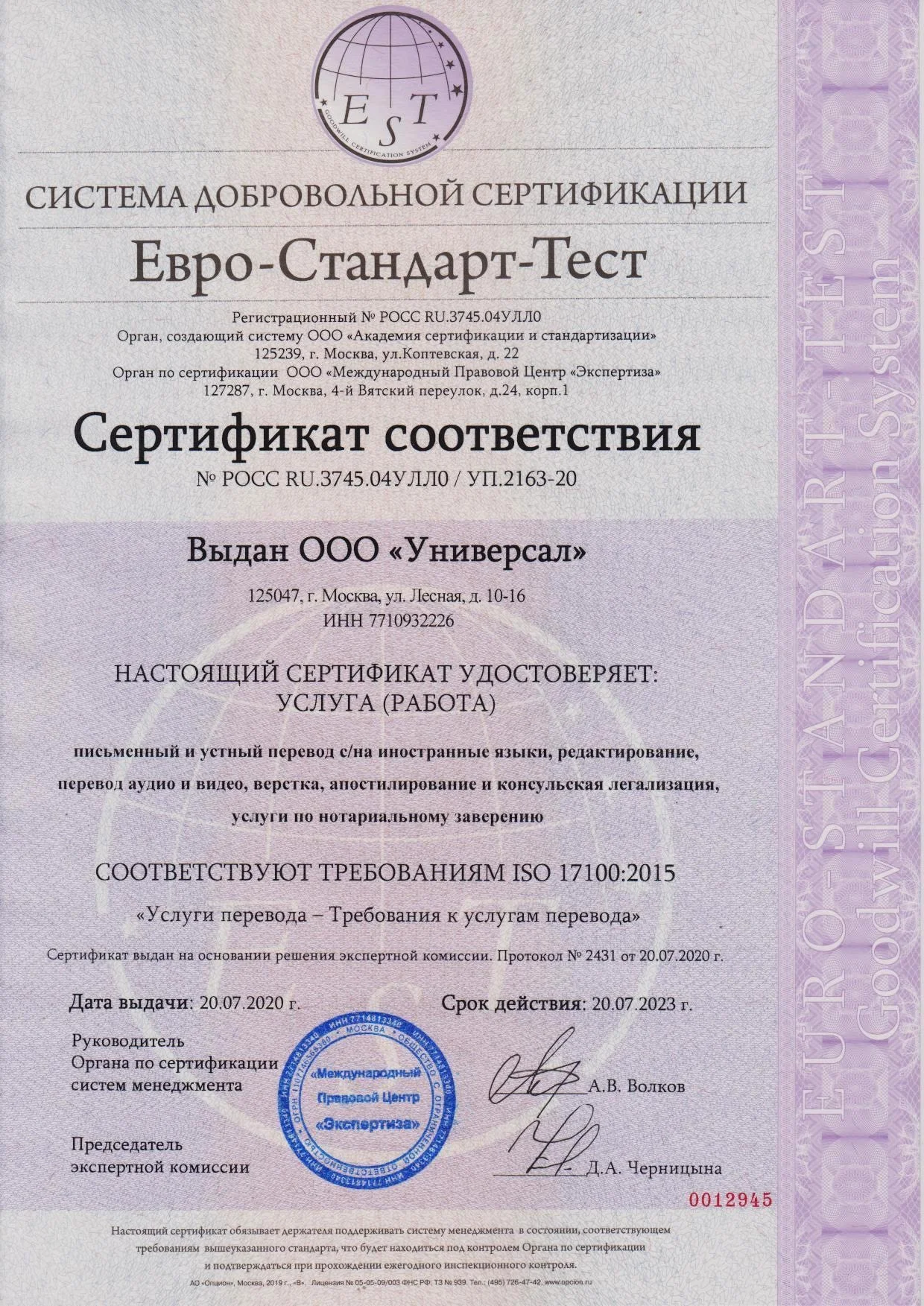
ISO 17100 certification is conducted by accredited bodies — in Russia, these include Intersertifika, Bureau Veritas, TUV. The certificate is issued for 3 years with annual surveillance audits.
Request a copy of the certificate from the translation agency and check:
- Name of the certification body (must be accredited)
- Certificate validity period
- Scope — which language pairs and translation types the certificate covers
If an agency claims to work "in accordance with ISO 17100" but cannot present a certificate — that's a declaration of intent, not confirmed compliance. The difference is fundamental, especially in tender procurement where certification may be a mandatory requirement.

 Max
Max