Apostille: What It Is and How It Works
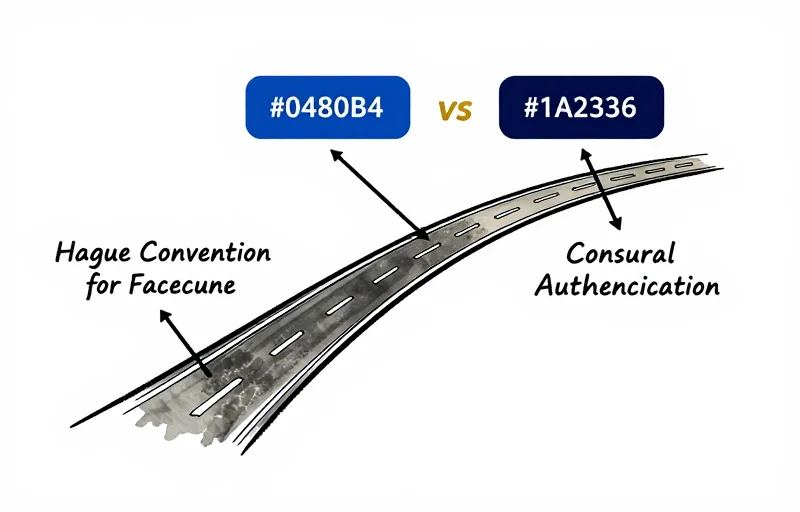
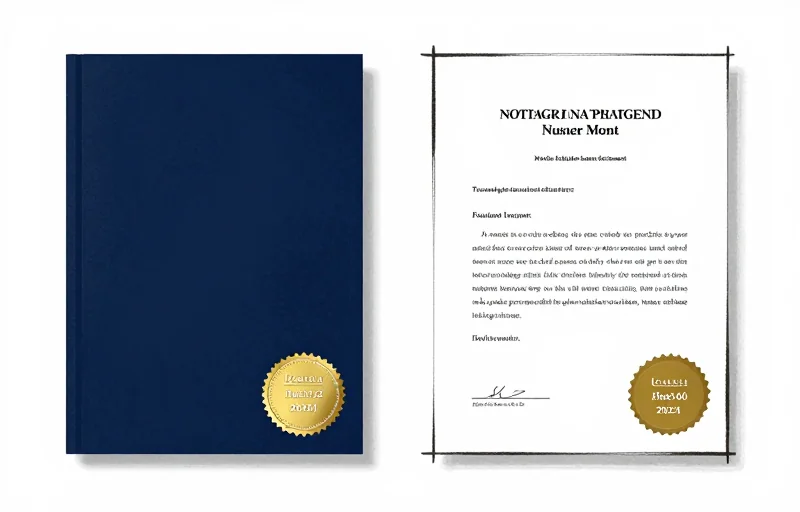
An apostille is a special stamp affixed to a document (or to a separate sheet attached to the document) by an authorized government body. The apostille certifies the authenticity of the signature, the capacity of the person who signed the document, and the authenticity of the seal. It was introduced by the Hague Convention of 1961.
A document with an apostille is recognized as official in all 124 member states of the convention without additional procedures. This is significantly simpler and cheaper than consular legalization.
Which Countries Accept the Apostille
Key Hague Convention countries: all EU member states (Germany, France, Spain, Italy), the United Kingdom, the USA, Australia, Japan, South Korea, Israel, Turkey, Brazil, Argentina, Mexico, and South Africa.
Not parties to the convention: Canada, China (except Hong Kong and Macau), UAE, Saudi Arabia, Iran, Iraq, and most Southeast Asian countries (except Japan and South Korea). These countries require consular legalization.
Who Issues the Apostille in Russia
Depending on the document type, the apostille is issued by different authorities:
- Civil Registry Offices (ZAGS) — for birth, marriage, death, and name change certificates (timeline: 5 business days)
- Ministry of Justice — for notarized documents (timeline: up to 30 business days)
- Ministry of Education — for diplomas and academic certificates (timeline: up to 45 business days)
- Ministry of Internal Affairs — for criminal record certificates (timeline: up to 30 business days)
The state fee for apostille issuance is 2,500 RUB per document (Art. 333.33 of the Russian Tax Code).
Consular Legalization: Step-by-Step Process
For countries that are not parties to the Hague Convention, the document undergoes a triple procedure:
- Notarized translation (if the document is in Russian)
- Certification by the Russian Ministry of Justice — confirms the authenticity of the notary's signature
- Certification by the consular division of the Russian Ministry of Foreign Affairs — confirms the Ministry of Justice official's signature
- Legalization at the embassy/consulate of the destination country
The total timeframe for consular legalization is 4 to 12 weeks depending on the country and consulate workload. The cost starts from 5,000 RUB per document (excluding consular fees).
Comparison: Apostille vs Consular Legalization
| Parameter | Apostille | Consular Legalization |
|---|---|---|
| Number of countries | 124 countries | Other countries |
| Number of stages | 1 stage | 3–4 stages |
| Timeline | 5–45 business days | 4–12 weeks |
| Cost | from 2,500 RUB | from 5,000 RUB + consular fees |
Correct Procedure: Translation + Legalization
A common mistake is the wrong order of processing. The correct sequence depends on the procedure:
For apostille: first obtain the apostille on the original document, then translate the document together with the apostille, then have the translation notarized.
For consular legalization: first do the notarized translation, then certify it at the Ministry of Justice, Ministry of Foreign Affairs, and the consulate in sequence.
How We Help
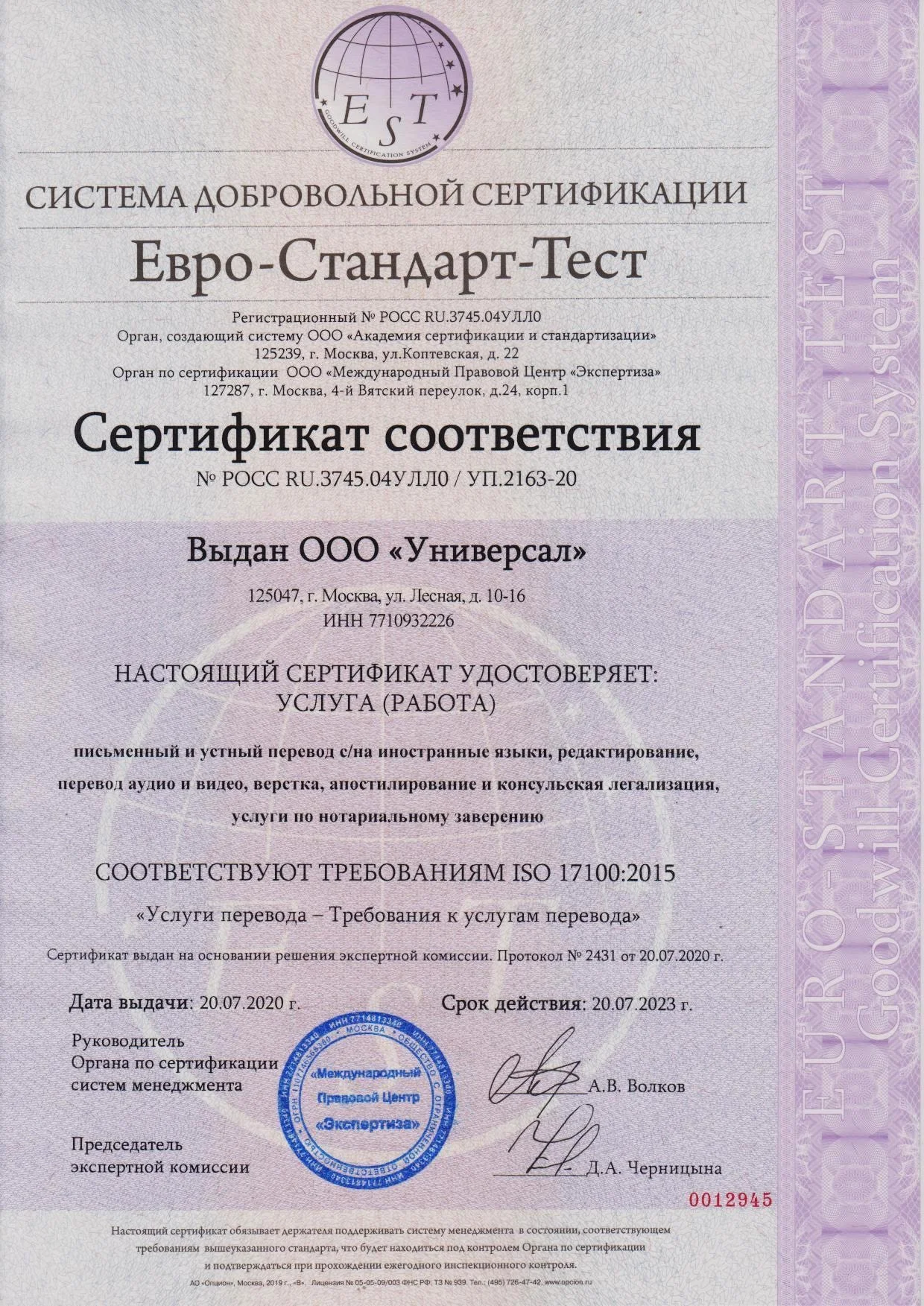
Translation Agency "Universal" handles the full cycle: translation, notarization, submission for apostille or consular legalization. Since 2013, we have processed over 8,000 documents with apostille and legalization. We work on a turnkey basis — you just need to provide the originals, and we handle the rest.
Free consultation: send your list of documents and specify the destination country — we'll determine the required procedure and calculate the cost within 30 minutes.


 Max
Max