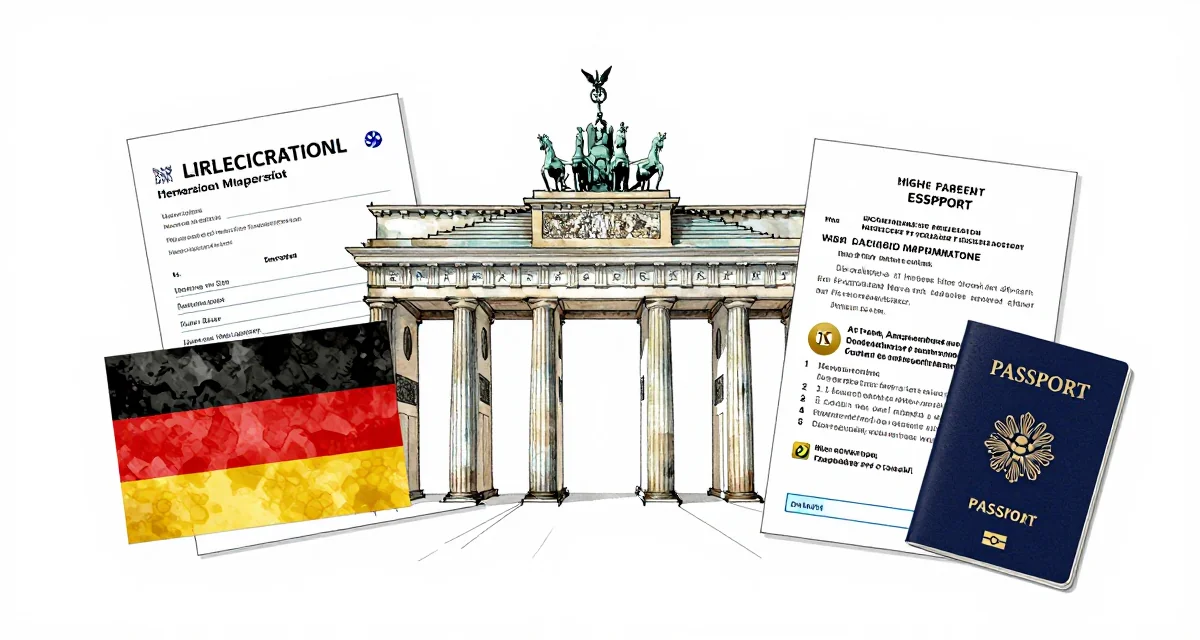
Immigration Visa Types and Basic Requirements
Germany is one of the most popular immigration destinations from Russia. Since 2024, an updated Skilled Immigration Act (Fachkräfteeinwanderungsgesetz) has expanded opportunities for obtaining an EU Blue Card and other work permits.
Main programs: EU Blue Card (for specialists earning from €43,800/year in 2025–2026), work visa, family visa (Familiennachzug), student visa, late repatriate visa (Spätaussiedler). Each has its own document package, but the basic set is common.
Basic Document Package: What Everyone Needs to Translate
- International passport — translation of all filled pages, including visa pages
- Birth certificate — with apostille (processed at civil registry offices, 5 business days)
- Marriage / divorce certificate — with apostille
- Criminal record clearance — with apostille (valid for 6 months for the German embassy)
- Health insurance — policy translation
All documents are translated into German. The German embassy does not accept English translations, except in certain cases when filing through the VFS Global visa center.
Documents for Blue Card and Work Visa
For an EU Blue Card, in addition to the basic package, you'll need translations of: higher education diploma, diploma supplement with grades, employment record book (or its replacement — reference letters from employers), employment contract with the German employer.
The diploma must be verified through the anabin database (anabin.kmk.org) — if your university has H+ status, the diploma is recognized automatically. If H- or not found — a recognition procedure (Anerkennung) through ZAB is required, taking 2–4 months.
Diploma translation with supplement costs from 5,500 RUB. Notarization — from 1,400 RUB per document.
Documents for Family Immigration
For family reunification (Familiennachzug), additionally translated are: children's birth certificates, kinship documents, German language proficiency certificate (Goethe-Institut certificate at A1 level or higher), proof of financial solvency.
For marriage to a German citizen, a certificate of eligibility to marry (Ehefähigkeitszeugnis) is required — in Russia, its equivalent is issued by civil registry offices. The document is translated into German with apostille.
Translation Requirements: German Standards
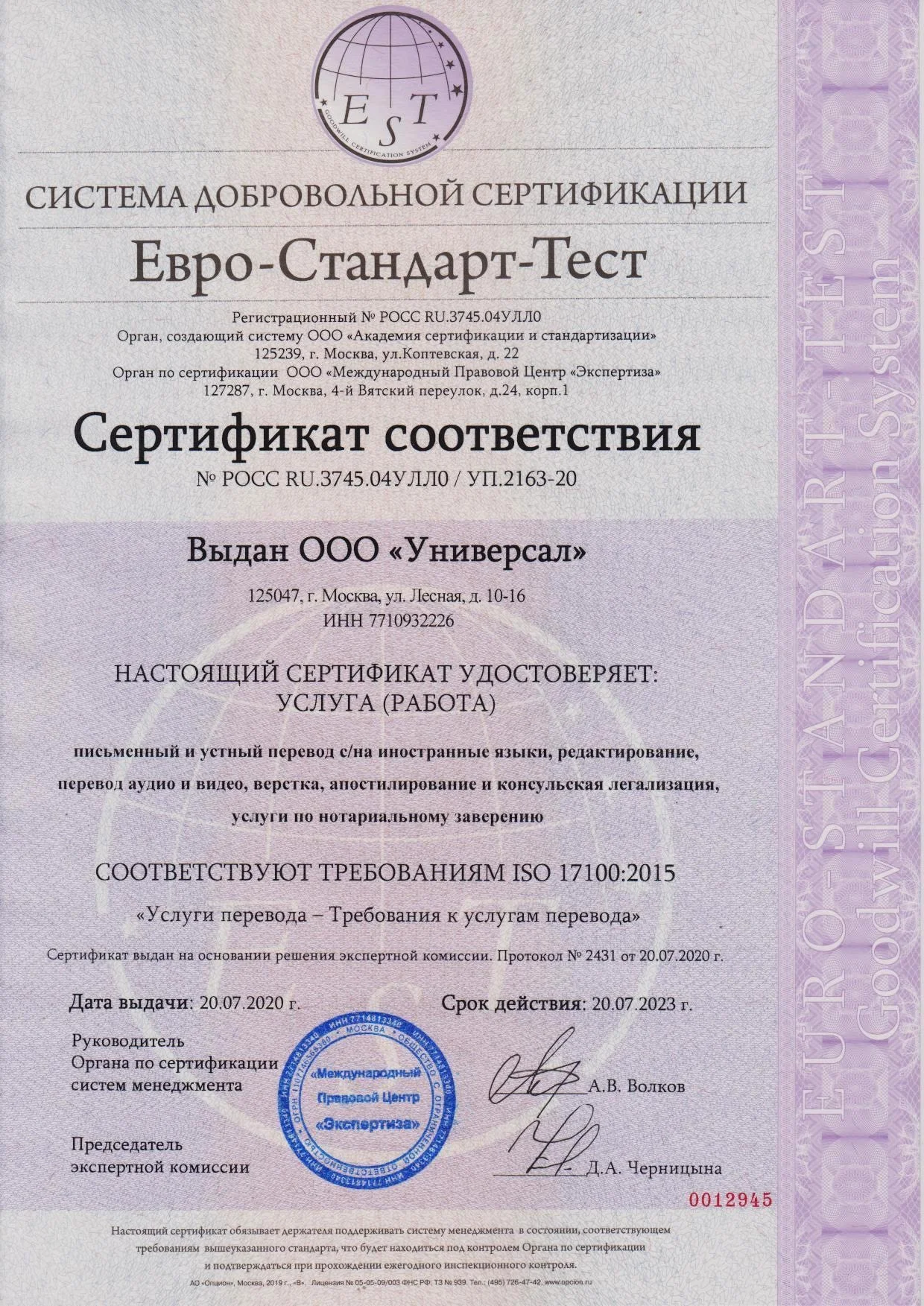
The German embassy in Moscow accepts notarized translations. The translator must be registered with a notary. We work with 20+ notary offices in Moscow — processing on the day of request.
The translation must be "complete and accurate" (vollständig und richtig): all seals, stamps, signatures, and form details are translated. Omitting any element is grounds for rejection. Our agency uses a two-stage review: translator + editor-proofreader specializing in German language.
Apostille: Procedure and Timelines
Germany is a party to the 1961 Hague Convention. Apostille on Russian documents is processed by:
- Civil registry certificates (birth, marriage, divorce) — at regional civil registry offices, 5 business days
- Diplomas and academic transcripts — at Rosobrnadzor, up to 45 business days
- Criminal record clearances — at the Ministry of Justice, up to 30 business days
The procedure: first apostille on the original, then translation of the document together with the apostille, then notarization of the translation. We handle the entire turnkey cycle.
Document Translation Costs for Germany
- Translation into German — from 1,100 RUB per page (1,800 characters of translated text)
- Notarization — from 1,400 RUB per document
- Apostille (state fee + services) — from 2,500 RUB per document
- Complete Blue Card package (10–15 documents) — from 25,000 RUB
We operate without VAT (simplified tax system) and provide contracts and closing documents. Standard package turnaround is 3–5 business days excluding apostille processing. Send document scans — we'll calculate the exact cost within 30 minutes.

 Max
Max