Energy Sub-sectors and Their Documentation
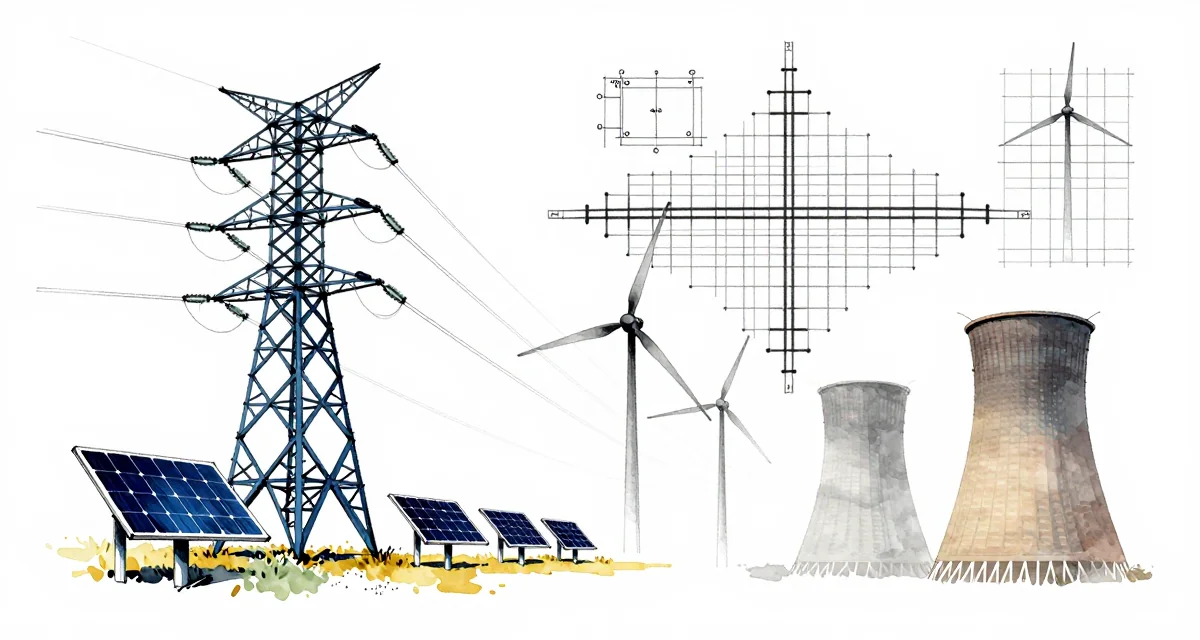
Energy is an umbrella term for several sub-sectors, each with its own terminology and regulatory framework:
Thermal power generation (TPP, CHP):
- Design documentation for boiler and turbine systems
- Technical specifications for equipment (boilers, turbines, generators)
- Operating procedures, maintenance manuals
- Environmental documentation (NOx, SOx, CO₂ emissions)
Nuclear energy (NPP):
- Nuclear safety documentation (IAEA standards)
- Technical descriptions of reactor units (VVER, PWR, BWR)
- Decommissioning procedures
- Safety Assessment Report (SAR)
Renewable energy sources (RES):
- Wind turbine documentation: Vestas, Siemens Gamesa, Enercon
- Solar power plants (SPP): inverters, panels, tracking systems
- Feasibility Studies for RES projects
Power grid infrastructure:
- Substation design documentation 35–750 kV
- Cable lines and overhead transmission lines
- Protection and automation systems (RPA)
- Automated metering systems (ASCME)
Oil refining and petrochemicals:
- Refinery design documentation (CDU, FCC, hydrotreating units)
- Industrial facility power supply systems
- Explosion protection documentation (ATEX, IECEx)
Standards: IEC, GOST R IEC, IEEE
Energy documentation is permeated with references to standards. The translator must understand the standards hierarchy and know Russian equivalents:
- IEC (International Electrotechnical Commission). The main standardization body in electrical engineering. Over 10,000 standards. Key series: IEC 61850 (digital substation), IEC 60076 (power transformers), IEC 62271 (high-voltage switchgear).
- GOST R IEC. Russian standards identical to IEC. For example, GOST R IEC 61850 = IEC 61850. When translating from English to Russian, we substitute the GOST R IEC number where it exists, rather than translating the IEC number.
- IEEE (Institute of Electrical and Electronics Engineers). American standards. IEEE C57 — power transformers, IEEE 519 — power quality, IEEE 80 — grounding. Used in projects with American equipment or engineering.
- GOST R / GOST (national). PUE (Electrical Installation Rules) — the "constitution" of Russian power engineering. PTEEP — technical operation rules. These documents have no direct international counterparts.
In translation, we provide parallel designations: "in accordance with IEC 60076-1 (GOST R IEC 60076-1)". This saves time for the engineer reading the translation.
Protection and Automation Systems
Protection and automation is one of the most terminology-intensive areas of energy. Translating protection documentation requires knowledge of:
- Protection types: overcurrent, differential, distance, directional
- Settings parameters: pickup current, operating time, reset ratio, distance protection zones
- Manufacturers: ABB (REL670, RED670), Siemens (SIPROTEC 5), Schneider Electric (MiCOM), SEL
- Communication protocols: IEC 61850 (GOOSE, MMS), IEC 60870-5-104, DNP3, Modbus
Specifics: a single protection panel may contain terminals from different manufacturers with documentation in German (Siemens), English (ABB, SEL), and Russian. The translator must ensure terminology consistency regardless of the source language.
Voltage Classes and Terminology
Energy terminology is strictly tied to voltage classes. In translation, it's important not to confuse:
- Low voltage (LV): up to 1 kV. Distribution boards, circuit breakers, 0.4 kV cable lines.
- Medium voltage (MV): 1–35 kV. Switchgear 6/10/35 kV, cable and overhead lines, transformer substations.
- High voltage (HV): 110–750 kV. Substations, overhead lines, power transformers, circuit breakers (SF6, vacuum, oil).
- Extra high voltage (EHV): 330–750 kV and above. Transmission lines, autotransformers, shunt reactors.
Terminology traps:
- "Circuit breaker" — at 0.4 kV panel it's a miniature circuit breaker (MCB), at HV level it's a power circuit breaker.
- "Disconnector" vs "switch-disconnector" (load break switch) — different functions.
- "Busbar" vs "busway/busduct" — different equipment.
- "Earthing" (BrE) / "Grounding" (AmE) — we use the appropriate variant based on the project's engineering origin.
We maintain an industry glossary of 8,000+ terms, divided by voltage class and sub-sector, loaded into SDL MultiTerm and integrated with SDL Trados and memoQ.
Design Documentation: From Specifications to Test Reports
A typical energy project generates the following documents (all requiring translation for international participation):
- Technical Specification. 50–200 pages. Defines equipment or facility requirements. Accurate numerical parameters are critical: capacity, voltage, frequency, climatic design.
- Bid Documents. Technical and commercial sections. Written translation of tender documentation is a frequent task when procuring imported equipment.
- Detailed Design. Drawings (single-line diagrams, protection schemes, cable schedules), specifications, calculations.
- Installation & Commissioning Manuals. Step-by-step procedures. A translation error = an installer error.
- Operation & Maintenance Manuals. 100–500 pages per equipment unit.
- Test Reports. Factory acceptance tests (FAT) and site acceptance tests (SAT). Contain measurement results — numbers are translated exactly, without rounding.
Documentation volume for a single 110/10 kV substation project: 2,000–5,000 pages. A major TPP or NPP — tens of thousands of pages.
Pricing and Conditions
Pricing for energy documentation translation:
- Text documents (EN/DE ↔ RU) — from 850 RUB per page (1,800 characters of translated text)
- Drawings (DWG/DXF) — from 800 RUB per sheet (depends on text density)
- Drawings (PDF, manual processing) — from 1,200 RUB per sheet
- Tender documentation (urgent translation) — from 1,150 RUB per page
- Productivity — 6–10 pages per day (depending on complexity and TM availability)
- 10–15% discount for volumes over 500 pages
We work under contract and sign NDAs. Simplified taxation (no VAT). Closing documents on delivery day. EDI via Diadoc or SBIS.
Office in Moscow, working remotely with energy companies across Russia and CIS. Since 2013, we have translated documentation for over 60 energy projects. Ready to discuss your project — contact us or send files for evaluation.
 Max
Max