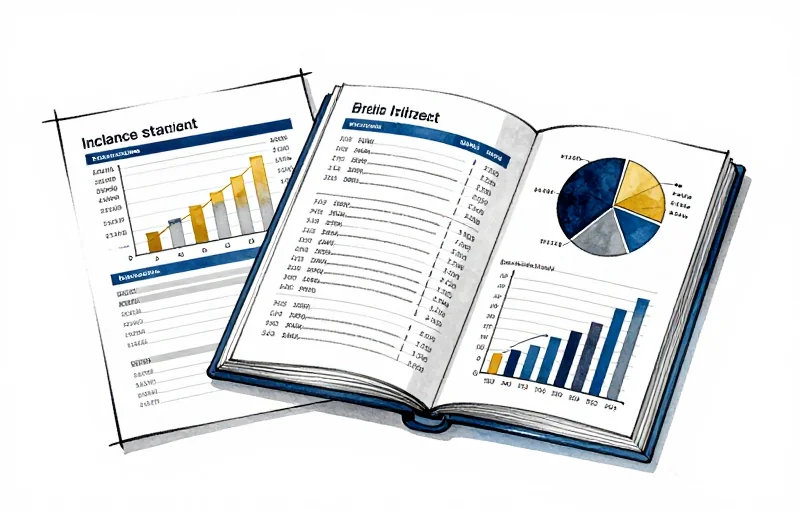
Why Financial Translation Is a Separate Specialization
Financial statements are one of the most terminology-intensive document types. The IFRS standard uses over 3,000 specific terms, many of which have no literal translation. For example, "fair value" is "справедливая стоимость" (not "честная цена"); "goodwill" is "гудвилл" or "деловая репутация" (not "добрая воля").
Since 2013 we have translated over 2,000 sets of financial statements for companies in energy, retail, IT, and manufacturing. Translators working with financial translation hold degrees in economics or finance.
IFRS vs GAAP: Key Differences for the Translator
International Financial Reporting Standards (IFRS) and US GAAP use different terminology for similar concepts:
- Revenue recognition — governed by IFRS 15 under IFRS and ASC 606 under GAAP. Terms overlap, but methodology differs.
- Leases — IFRS (IFRS 16) does not distinguish operating and finance leases; GAAP (ASC 842) retains the distinction.
- Inventories — IFRS prohibits LIFO; GAAP permits it. The translator must know these differences to convey context correctly.
We maintain a bilingual IFRS/GAAP glossary with 1,500+ terms, updated with every standard revision.
Big 4 Audit Firm Requirements
Deloitte, PwC, EY, and KPMG impose strict requirements on the translation of audit reports and financial statements:
- Terminology consistency — the same term must be translated identically throughout the entire document set (balance sheet, P&L, notes, audit report)
- Number format — in Russian reports the thousands separator is a space and the decimal mark is a comma. In English it is the reverse: 1,234,567.89 vs 1 234 567,89
- Document structure — the translation must exactly reproduce the original structure, including note numbering and cross-references
- Disclaimer — the translation is accompanied by a statement that the original-language version is authoritative
Annual Reports: Translation + Desktop Publishing
An Annual Report is not just numbers. It is a marketing document with infographics, photos, and designer layout. Translation includes:
- Translation of the text portion (CEO letter, strategy, ESG report)
- Translation of financial tables with number-format conversion
- Translation of notes to the statements (the most voluminous part — up to 70% of the document)
- DTP layout of the translated version in InDesign or similar software
Average annual report volume is 80–200 pages. Translation timeline is 10–20 business days with a team of 2–3 translators and an editor.
Translation Memory: Year-to-Year Consistency
For companies that translate accounting statements quarterly or annually, we create and maintain a Translation Memory (TM) — a database of translated segments. Benefits:
- Recurring segments are translated automatically — saving 15–40% of budget
- Terminology remains consistent across reporting periods
- Translation timelines shorten with each subsequent quarter
The TM is stored in TMX format and remains the client's property — you can transfer it to another vendor if you switch agencies.
Financial Translation Quality Control
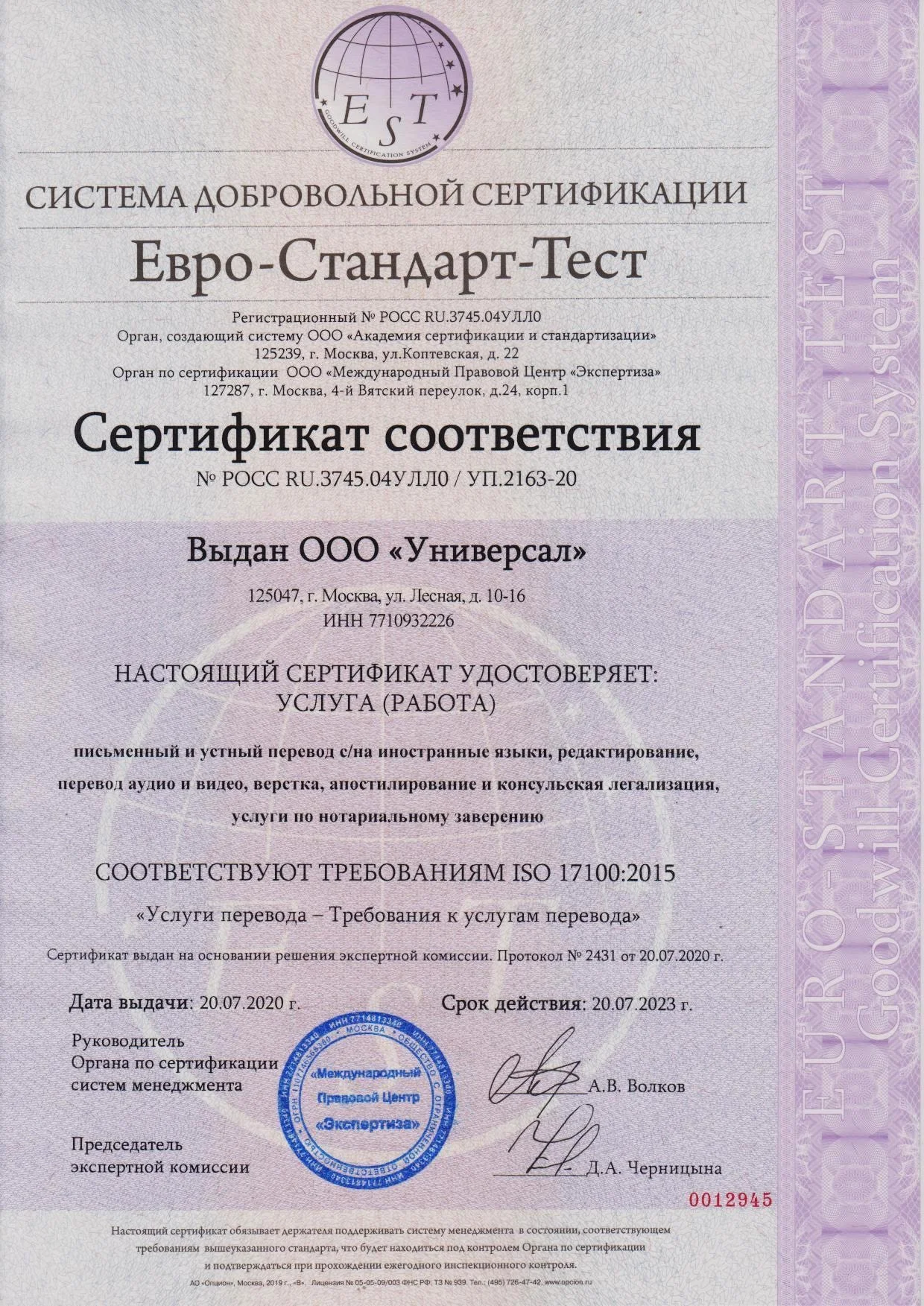
Every financial statement translation undergoes three-stage review per ISO 17100:
- Translation — performed by a translator with a finance degree and 5+ years of experience
- Editing — a second specialist cross-checks the translation against the original, verifying numbers and formulas
- Proofreading — final review of style, formatting, and cross-references
For numerical data we use automated verification — a script compares all numbers in the source and translation and flags discrepancies. This eliminates typos in amounts, percentages, and dates.

 Max
Max