Mistake 1. Not Providing Reference Materials
Technical documentation always relies on terminology adopted within a specific company or industry. If the translator doesn't receive a glossary, previous translations, or a style guide, they'll be guessing at terms. In our experience, having reference materials reduces the number of revisions by 70%.
Mistake 2. Skimping on CAT Tools
If your vendor translates manuals in Word without using SDL Trados, memoQ, or another CAT tool, you're losing money. Translation Memory (TM) stores all previous translations and automatically inserts recurring segments. When updating documentation, savings reach 40–60%. At Translation Agency "Universal", we use SDL Trados Studio and memoQ for all technical translations.
Mistake 3. Ordering Translation Without a Glossary
A glossary (terminology database, termbase) is a list of key terms with approved translations. Without one, the same term can be translated three different ways within a single document. We compile a glossary free of charge for orders of 50+ pages and approve it with the client before starting work.
Mistake 4. Choosing a Translator Based on Price Alone
A translator without a technical background won't understand tolerances, calibration procedures, or GOST/ISO specifications. We select specialists by profile: for oil & gas documentation — engineer-translators, for IT — translators with software development experience. The difference in quality is critical.
Mistake 5. Not Allowing Time for Editing
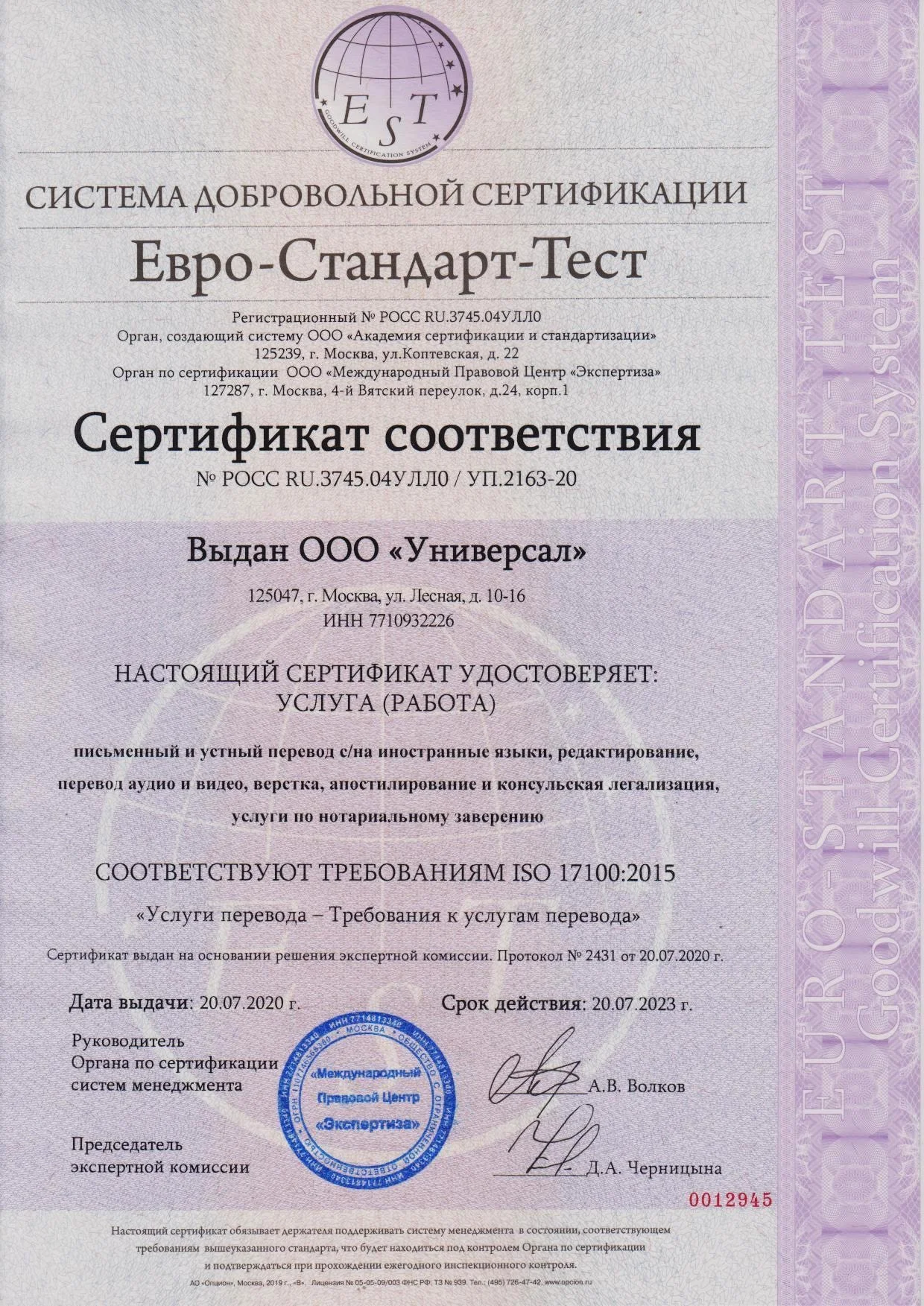
The ISO 17100 standard requires mandatory revision of the translation by a second linguist. If an agency offers translation only without editing, it doesn't meet international quality standards. We complete all translations using the TEP workflow (Translation — Editing — Proofreading).
Mistake 6. Sending PDFs Instead of Source Files
Translating from PDF takes 30–50% more time: text needs to be extracted, formatting restored, tables and diagrams processed. If you have source files (InDesign, FrameMaker, Word, XML), send them. This reduces turnaround and cost of manual translation.
Mistake 7. Ignoring the Usage Context
Translating a technical specification for internal use and for submission to a certification body are two different levels of quality and formatting. Tell your translator where and how the document will be used. This affects style, terminology, and layout.
Mistake 8. Not Accounting for Text Expansion
When translating from English to Russian, text volume increases by 15–25%. For interfaces, labels, and limited-space fields, this is critical. We warn about expansion in advance and suggest shortening options if it matters for the layout.
Mistake 9. Ordering Translation in Parts from Different Agencies
When different chapters of the same manual are translated by different vendors without a shared TM and glossary, the result is inconsistent terminology and mismatched style. A single vendor with a unified TM ensures consistency throughout the entire project.
Mistake 10. Not Planning for Updates
Technical documentation is updated regularly. If no TM and glossary were created during the initial translation, every update will have to be translated from scratch. When working with us, TM is stored indefinitely, and when documentation is updated, you only pay for new and modified segments.
How to Order Technical Translation Correctly
To get a quality result the first time:
- Send source files (not PDF), a glossary, and reference materials
- Specify the context: who the document is for and where it will be used
- Clarify whether you need desktop publishing (DTP) in the original format
- Request a trial translation of 1–2 pages to agree on the style
- Sign an NDA if the documentation is confidential
We have been working with technical documentation since 2013. Our portfolio includes projects for Siemens, KAMAZ, and Gazpromneft. We'll calculate the cost and timeline within one hour.
 Max
Max