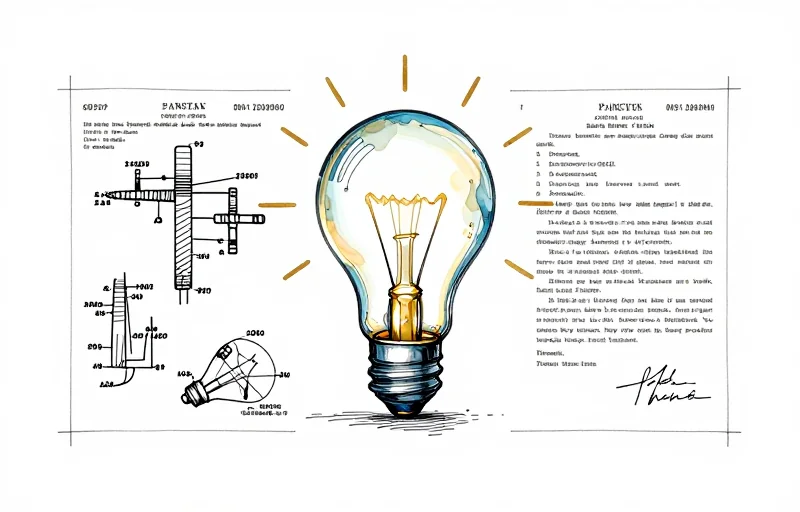
Patent Document Structure
A patent is a document with a rigid structure where every element has legal significance. The translator must understand the function of each section:
- Title of Invention — brief, precise, without promotional wording. WIPO limits the length to 10–15 words.
- Abstract — a brief description of the invention's essence in 150 words. Used for patent database searches, so key technical terms must be translated with maximum precision.
- Description — full disclosure of the invention: field of technology, prior art, essence of the invention, drawing descriptions, embodiment examples.
- Claims — the legally binding part. Defines the scope of legal protection. Every word in the claims has legal significance.
- Drawings — labels on drawings are translated with reference numbering preserved.
Claims: Why This Is the Most Complex Section
Claims are the section where a translation error carries maximum legal consequences. Translation specifics:
Independent and dependent claims. An independent claim defines the invention in its broadest scope. Dependent claims reference it and specify features. The reference structure must be preserved flawlessly.
Open and closed terminology. "Comprising" — an open formulation allowing additional elements. "Consisting of" — a closed formulation excluding other elements. Translating "comprising" as "consisting of" catastrophically narrows patent protection.
Term consistency. If in the description a device is called a "valve," in the claims it must be called exactly the same. Synonyms are unacceptable — a patent examiner may interpret them as references to a different element.
PCT International Applications
PCT (Patent Cooperation Treaty) is a system allowing simultaneous patent filing in 157 countries. PCT application translation is governed by WIPO rules:
- The translation is filed with the national/regional office during the national phase (typically 30–31 months after the priority date)
- Translation quality requirements are set by each office separately. EPO accepts translations in English, French, or German. Rospatent — in Russian
- Translation errors can be corrected, but the correction procedure (Rule 91 PCT) is time-limited and requires proof that the error is obvious
Filing deadlines are strictly regulated. Missing the national phase deadline = loss of patent rights in that country. We recommend allowing at least 3 weeks for translating a 20–40 page patent application.
WIPO Translation Requirements
WIPO publishes guidelines for patent document translators. Key requirements:
- Completeness. The translation must contain all elements of the original without omissions or additions.
- Terminology precision. Standardized terms from the IPC (International Patent Classification) and industry glossaries are used.
- Numbering. Claim numbering, drawing reference numbers, formula numbers, and table numbers are preserved unchanged.
- Format. The translated document must reproduce the structure and formatting of the original.
We use specialized glossaries from WIPO, FIPS (Rospatent), and EPO. Our terminology database contains over 35,000 patent terms across 12 technical fields.
Our Patent Translation Experience
Since 2013 Translation Agency "Universal" has translated over 500 patent documents. Main areas:
- Pharmaceuticals and biotechnology — patents on active substances, dosage forms, treatment methods
- Mechanical engineering and energy — structures, mechanisms, technological processes
- IT and telecommunications — algorithms, protocols, system architecture
- Chemical industry — compositions, synthesis methods, catalytic processes
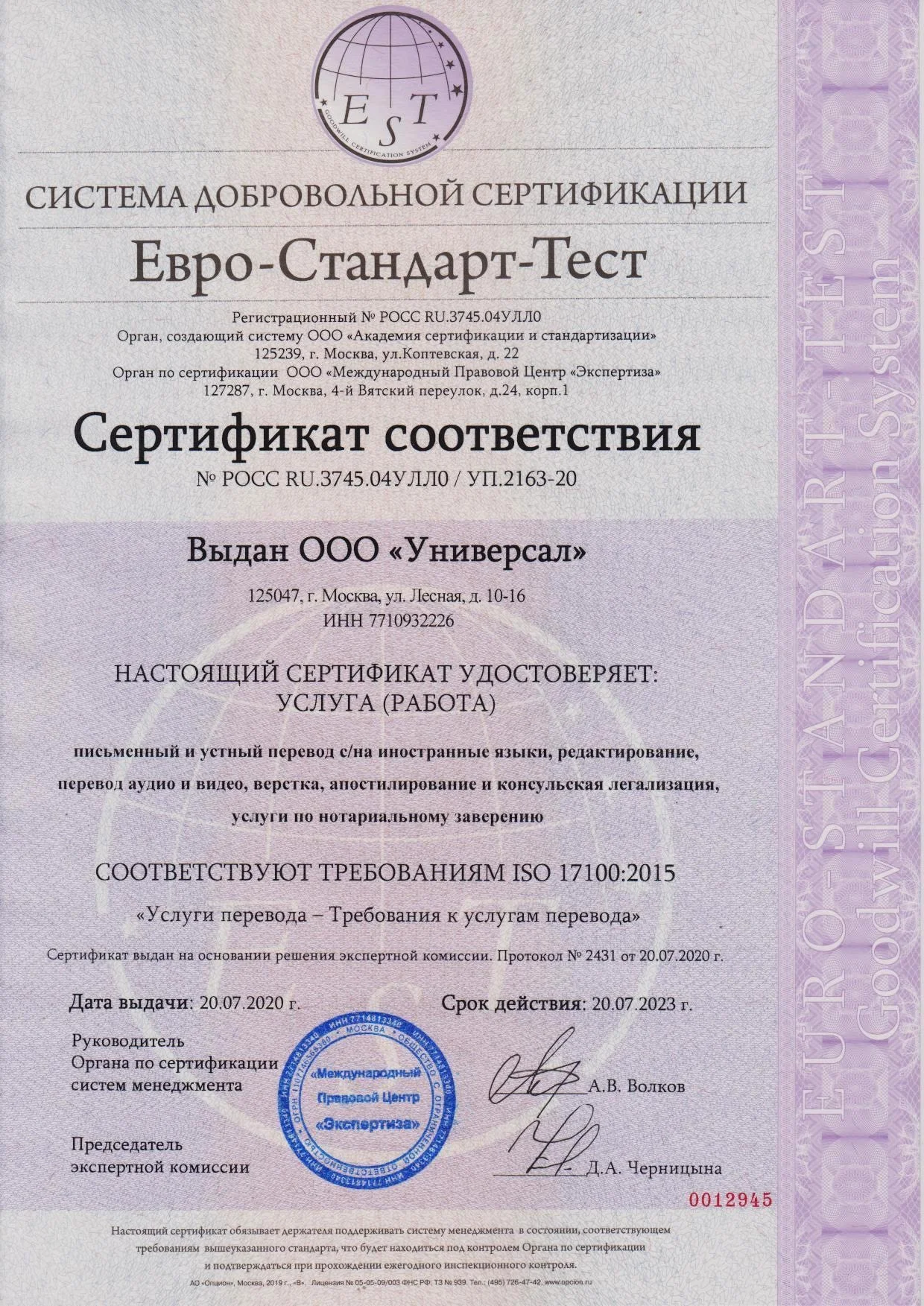
Every patent translation is performed by a translator with relevant technical education and undergoes mandatory editing by a second specialist (per ISO 17100). For regular clients we maintain individual TM and terminology databases.
More about the service: Patent Translation. Related services: technical translation and legal translation.
 Max
Max